
Contents
- 1 The Charm of Nagoya’s Famous “Red Miso”! A Deep Insight into Japanese Food Culture That Foreigners Should Know
- 1.1 Previous Article: The Charm of Goheimochi
- 1.2 1. What Is Akamiso? The History and Characteristics of “Hatcho Miso”
- 1.3 2. Taste Characteristics | Not as Salty as It Looks?
- 1.4 3. Health Benefits | Red Miso as a Superfood
- 1.5 4. A Must-Try! “Nagoya-meshi” Featuring Red Miso
- 1.6 Points Foreign Tourists Should Know
- 1.7 5. Culinary Experiences in the Global Age
- 1.8 Summary | Understanding the Differences Deepens Your Travel Experience in Japan
The Charm of Nagoya’s Famous “Red Miso”! A Deep Insight into Japanese Food Culture That Foreigners Should Know
“I know about Japanese miso soup, but why is Nagoya miso so dark?”
“I wonder what red miso tastes like?”
When traveling in Japan, you’ll notice that the flavors of the cuisine vary greatly from region to region.
In this article, we’ll take a detailed look at the characteristics of “Akamiso,” famous in the Nagoya (Aichi Prefecture) area, and recommend dishes that foreigners absolutely must try.
Previous Article: The Charm of Goheimochi
1. What Is Akamiso? The History and Characteristics of “Hatcho Miso”
Japanese miso is basically made by mixing soybeans, rice, and salt and allowing the mixture to ferment.
However, Nagoya’s red miso (especially the traditional “Hatcho Miso”) is made in a very different way.
- The ingredients are only “soybeans and salt” (no rice is used).
- It is slowly aged over a period of more than two years
- Artisans manually stack heavy stones on top of the mixture in large wooden barrels for storage
This traditional, time-intensive method results in a miso with a deep color “reddish-brown (a color close to black)” .
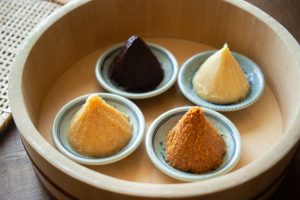
2. Taste Characteristics | Not as Salty as It Looks?
Many foreigners seeing red miso for the first time assume, “It looks so dark, it must be very salty.”
However, that is a misconception. In fact, red miso isn’t as salty as it looks.
- It has a strong “umami” flavor derived from the breakdown of soybean components
- It has a deep richness and a slight astringency, similar to chocolate or red wine
- Since it doesn’t contain rice, it’s less sweet than standard white miso
In other words, it’s a sophisticated flavor for adults who appreciate deep richness, much like dark chocolate or aged cheese.
3. Health Benefits | Red Miso as a Superfood
Red miso is also a “superfood” that supports Japanese health.
Due to its long fermentation process, it has a higher nutritional value than regular miso.
There are three key benefits I’d especially like to highlight for health-conscious foreigners.
- Antioxidant Effects: The compounds found in its deep color help keep your body feeling youthful
- Easy to digest: Since the soy protein has already been broken down, it is gentle on the stomach
- Amino acids: It is rich in essential amino acids necessary for building the body
It’s not only delicious but also the perfect food for maintaining your health while traveling.
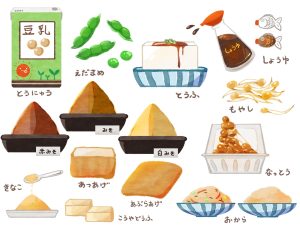
4. A Must-Try! “Nagoya-meshi” Featuring Red Miso
Nagoya is home to many unique local dishes (Nagoya-meshi) made with this red miso.
Here are three dishes that are especially popular with foreign visitors.
- Representative local dishes: Miso Katsu, Miso Nikomi Udon, and Doteniku
① Miso Katsu
This dish features crispy fried pork cutlet (tonkatsu) generously topped with a sweet, rich sauce made from red miso. The juicy meat pairs perfectly with the rich miso sauce, making it a great accompaniment to white rice.
② Miso-Nikomi Udon
This dish features firm, chewy udon noodles, chicken, eggs, and green onions simmered in a red miso broth in a hot earthenware pot. It’s the perfect energy-boosting meal, especially during the cold season, as it warms you right down to your core.
③ Dote-Ni
This dish features beef tendon, daikon radish, and tofu simmered for hours in red miso. The meat becomes incredibly tender, and the miso flavor permeates every fiber. It’s extremely popular as a snack with drinks at Japanese izakayas.
Points Foreign Tourists Should Know
Understanding the culture of red miso is essential for enjoying the diversity of Japanese cuisine.
- Enjoy it as a dish completely different from regular miso soup
- If you find the flavor too strong, try eating it with plain white rice
- Since each restaurant uses a different miso blend, we recommend trying different versions
Don’t judge it by its color alone—taking a bite is the first step to discovering new flavors.
5. Culinary Experiences in the Global Age
While Japanese cuisine (such as sushi and ramen) is now available worldwide, regionally specific flavors like red miso can only be experienced by actually visiting those places.
That is precisely why you need a spirit of adventure that isn’t bound by preconceptions.
Instead of assuming that “Japanese flavors are always mild and subtle,” embracing the bold, traditional flavors of Nagoya right before your eyes will make your trip all the more enriching.
Summary | Understanding the Differences Deepens Your Travel Experience in Japan
The characteristics of Nagoya’s red miso include aging for over two years, a rich depth of flavor, consistent umami, and health benefits.
Its ingredients, preparation methods, and history differ from the food cultures of Tokyo and Kyoto.
It’s not a matter of which is superior; rather, it’s important to appreciate the fact that different regions have different food cultures.
Only travelers who understand this essence can truly grasp the deep charm of Japan.
Once you’re full, head to Call Girl Nagoya for a thrilling experience →→Click here←←
