
The reason Japanese swords continue to fascinate people is that the fusion of their astonishing functional beauty—which achieves the seemingly contradictory qualities of “unbreakable, unbendable, and sharp” —the mystical luster of “tamahagane” forged from iron sand, and their modern appeal as portrayed in pop culture such as anime and video games .
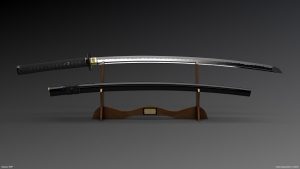
1. Ultimate functional beauty and the characteristics of “unbreakable, unbendable, and sharp”
The Japanese sword achieves “hardness (sharpness)” and “toughness (resistance to breaking)”—qualities that are inherently incompatible—through a special structure that combines hard “kawagane” (outer steel) and soft “shingane” (core steel).The curvature and hamon (temper line) produced by this meticulous forging technique have earned the Japanese sword high acclaim not only as a weapon but also as a work of art.
2. The Mystical Material “Tamahagane” and Artisanal Craftsmanship
The raw material for Japanese swords is “tamahagane,” produced using Japan’s unique “tatara” ironmaking method.By repeatedly folding and forging this precious iron sand—which contains extremely few impurities—the swordsmith creates beautiful patterns and a lustrous sheen in the base metal. This one-of-a-kind metalwork captivates people.
3. Pop Culture and the “Sword Boom”
In recent years, the popularity of Japanese swords has grown even further as they are depicted as the “ultimate weapon” in manga, video games, anime, and other media. An increasing number of fans are taking an interest in the history behind the characters and the swords themselves, leading to a steady stream of visitors to art galleries and museums across the country.

4. Spirituality and Historical Romance
Swords have a history of being treated not merely as weapons, but as the soul of the samurai, or as offerings to the gods and Buddhas, and as symbols of authority. Each sword holds the story of its maker and owner, and this historical romance continues to captivate modern enthusiasts.
