
Japanese is considered one of the “most difficult languages in the world” and is classified as one of the most challenging languages, requiring approximately 2,200 hours (more than two years) to master, particularly for Westerners . The main challenges include distinguishing between the three writing systems (kanji, hiragana, and katakana), ambiguous expressions, the omission of subjects, and a context-dependent honorific system .
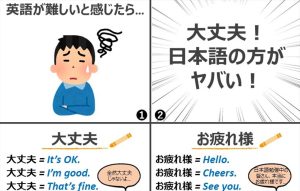
Reasons Why Japanese Is Difficult
- Complexity of characters and writing systems: In addition to Hiragana and Katakana, learners must memorize thousands of Kanji. Kanji have “On-yomi” (Sino-Japanese readings) and “Kun-yomi” (native Japanese readings), meaning they can have multiple pronunciations.
- Context-dependent ambiguous expressions: There is a culture of not stating “yes” or “no” explicitly, but rather determining meaning from context (reading the room).
- Distinguishing Particles: Subtle nuances between particles like “ha” and “ga” are considered more difficult than English articles.
- Complex honorific system: It is necessary to distinguish between respectful language, humble language, and polite language depending on the relationship with the other person.
- Overwhelming Vocabulary Size: A mix of native Japanese words, Sino-Japanese terms, and loanwords results in a large vocabulary required for everyday conversation.
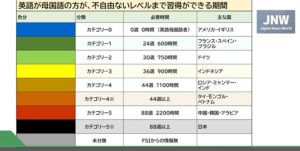
According to U.S. Department of State guidelines, Japanese is ranked as “Category 5,” the highest difficulty level for English speakers, making it a language with a very high learning difficulty. On the other hand, for speakers of Korean and other languages with similar grammatical structures, it can be relatively easier to learn.
