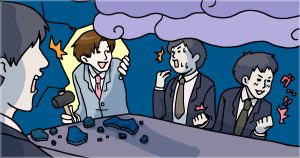
“Reading the air” ()refers tothe ability to sense the atmosphere of a situation, unspoken rules, and the emotions of others, thereby maintaining harmony without disrupting the group dynamic ( ). It is a cultural trait highly valued in Japanese business and daily life. Rooted in a historical culture of community and the philosophy of harmony, this concept is underpinned by a tradition that prioritizes avoiding conflict and emphasizes obedience to group rules and top-down directives.

The Background and Characteristics of the Culture of Reading the Air
- Historical Roots: With a background in an agricultural society with over 1,000 years of history, the Shinto concept of “wa” (harmony), and the samurai code of “rei” (courtesy) and “haji” (shame), this has led to a mindset that prioritizes group harmony above all else, a tradition that continues to this day.
- A Survival Strategy: Historically, reading the air was essential for survival to avoid being ostracized from the group through practices such as “ mura-hachi” (village excommunication) or beheading.
- Avoiding Conflict: It is a culture that regards suppressing one’s own assertions and maintaining group harmony as a “virtue.”
- Discerning Implied Intentions: It is characterized by a high-context culture where communication relies on “atmosphere” rather than “words.”
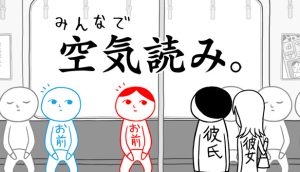
“Atmosphere” in Modern Japan
- Business and Interpersonal Relationships: In the workplace, the ability to avoid causing a stir and to read the mood of superiors and the group is often viewed as a sign of competence, while those who deliberately ignore the atmosphere and speak up tend to be treated coldly.
- Gen Z Trends: Young people also read the “atmosphere” rather than relying on “words”; they are extremely cautious in interpersonal relationships and activate an “awkwardness sensor” to avoid awkward situations.
- Psychological Factors: It has been pointed out that due to low stress tolerance (a genetic factor), there is an increased tendency to conform to the group in order to avoid being disliked by others.
Points to Note and Drawbacks
- Exhaustion from “Excessive Conformity”: There is a problem known as “excessive conformity,” where people become mentally exhausted by forcing themselves to read the room too much in every situation.
- The “Highly Competent Fool” Dilemma: A structure where people overlook problems to maintain harmony and where only obedience is demanded has led to the country being described as a land of “highly competent fools,” where innovation is stifled.