
Japanis a “powerhouse of personification,” where the practice of turning anything into a character — known as “personification “— has developed in a uniquely Japanese way, as seen in manga, games, and anime. .<
<
Today, everything from “Uma Musume” and “Kantai Collection” to Japan’s 47 prefectures is transformed into beautiful young women and handsome young men, becoming beloved by the public,<
<
and since the 2010s, the “anything-goes personification boom” in the anime and gaming industries has been attracting global attention.
Japanese personification is a traditional culture with a history of over 1,000 years, dating back to the Heian-period National Treasure, *Chōjū-giga* . Rooted in the ancient belief that “Yao-yorozu no Kami” (eight million gods) dwell within all things, the Japanese national character seeks to understand every concept by likening it to a human being.
Historical Roots
- Heian and Kamakura Periods : The National Treasure “Chōjū-giga,” in which animals behave like humans, is considered the origin of personification in Japan.
- : In literature such as the Otogi-zōshi, the concept of “tsukumogami”—objects that transform into monsters—made its debut.
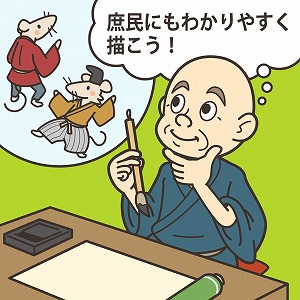
- Edo Period : Parodies depicting fish, vegetables, and proverbs in a human-like manner became wildly popular among the common people in ukiyo-e and kusazōshi.
Evolution into Modern Pop Culture
- Military & History : “Kantai Collection,” which depicts real warships as beautiful young women, and “Touken Ranbu,” which portrays famous swords as handsome men.
- Biology & Science : “Working Cells,” which depicts the functions of cells within the body, and “Uma Musume Pretty Derby,” which transforms racehorses into beautiful young women.
- Infrastructure & Regional : The “Akari no Moribito” project, which aims to revitalize local communities by turning lighthouses across Japan into handsome men.

- The Spirit of the Eight Million Gods: The ancient belief that all things possess a soul fosters a sense of familiarity with inanimate objects.
- Ease of Understanding: By giving human-like personalities to abstract concepts and place names, they become more approachable and easier to remember.
- Character Culture: The culture surrounding manga and anime characters is well-established, and personification allows people to empathize with them.
In Japan, personification extends far beyond the realm of mere hobby; it is utilized for a variety of purposes, including as an educational tool and a means of promoting regional attractions.
